This is the final entry in a three-part series describing my most recent backpacking trip into the White Mountains. To find out what happened over the previous two days, click here for part 1, or here to see part 2.
I did not sleep particularly well on the second night. Given that I had tried to start sleeping at 17:30, and that my sleeping bag was half-full clothes and water bottles and everything else I didn’t want to freeze overnight, this was not unsurprising. I woke up about every two hours until 04:00, when I finally decided I’d had slept enough. The sun was still hours from making an appearance, so I needed to use my headlamp to pierce the darkness as I prepared for the longest day of my trip. I took some naproxen to help with my pains that were not fully recovered from the night’s rest and hoped it would keep things from getting too much worse over the day. I departed just before 05:00 and stopped again briefly to appreciate the view with a bench I’d found the day before. The stars shone brightly in the clear night sky, but only an inky black outline revealed the presence of the mountains surrounding me. A moment of peace before a long, painful trail to come.
Just like the previous day, my morning began with a steep climb to the top of a mountain. Fortunately, the trail was packed out this time so the going was easier, and I was equipped with a better strategy; I would exert no effort beyond the bare minimum to put one foot in front of the other. If my pace felt the least bit tiring, or I noticed I was breathing at all hard, I slowed down. If that meant trudging along at half-a-mile per hour, it would still be faster than if I pushed myself to breaking and couldn’t move at all.
My other strategic improvement over the previous day was to wear a smaller backpack on my front under my coats. This served a doble purpose of providing more ready access to coats and snacks, while also creating warmer space to keep my water from freezing. Dad had suggested this to me before I left, but the first day had been above freezing and the second day was short enough that there wasn’t time for the water to freeze completely. Today though, I wasn’t taking any chances.
With my strictly enforced gentle pace, it took me more than 45 minutes to reach the summit of Mount Garfield less than half a mile from camp. I was a little disheartened that I was moving at less than 1 mph, but not concerned. The plan of limited exertion was working, and I was nowhere near as tired at this summit as I had after climbing the same distance out of the previous day. And I had left as early as I did precisely so I could move very slowly and not worry about having time to finish. The wind was aggressively scouring the exposed summit, so I only took a moment to appreciate the starlit silhouettes of the mountains before continuing onward.
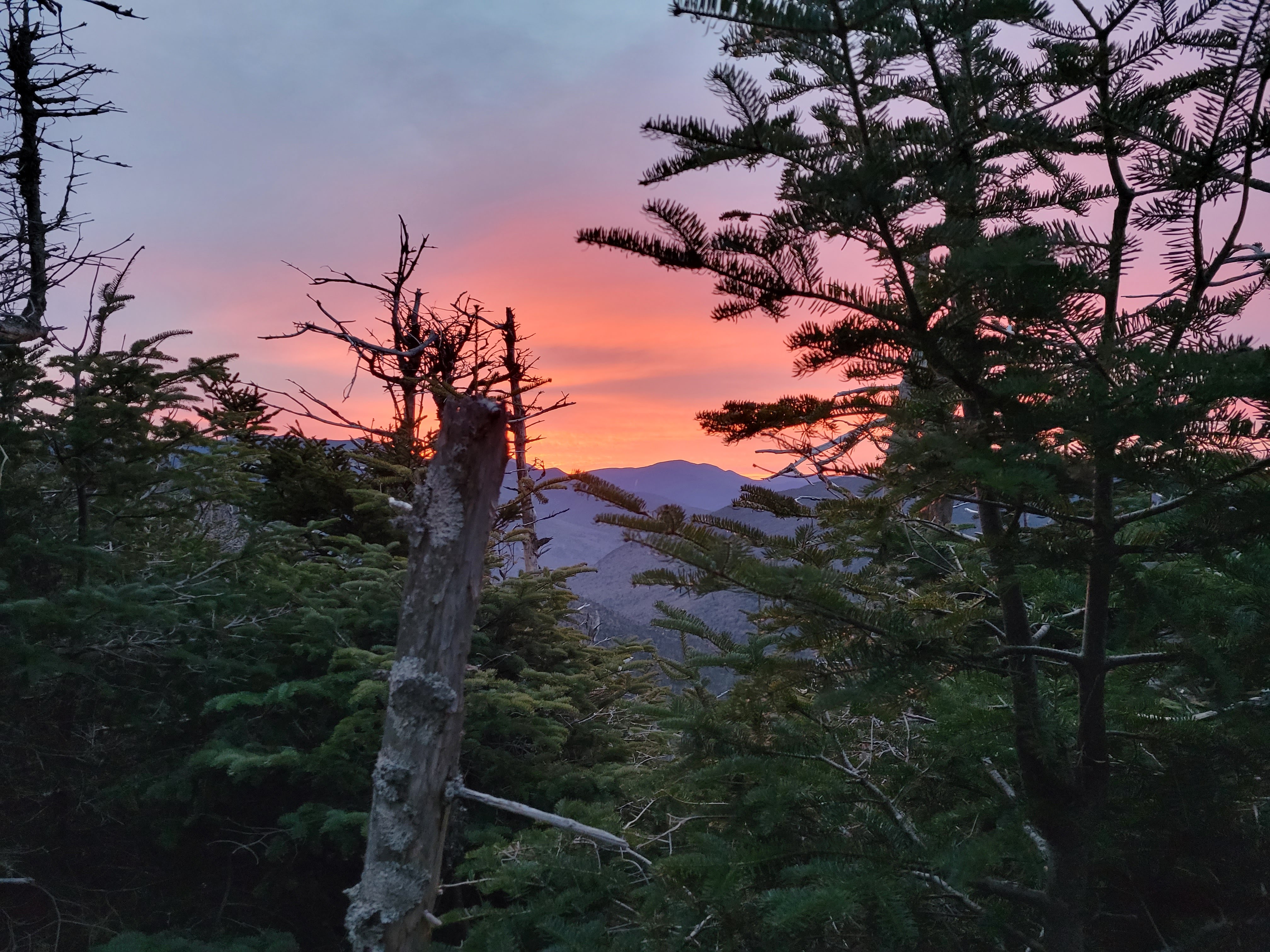
The sky began to glow with the light of early dawn as I descended Mount Garfield. I really appreciated that the coming sun was trying to lighten my mood, because the trail certainly wasn’t feeling so generous. As I continued down Mount Garfield and towards Mount Lafayette, the once well packed-out trail became steadily worse. At first I would only rarely break through the surface, and even when I did, it wasn’t enough to justify putting on my snowshoes. I traveled further though, and the trail conditions slowly worsened. And similarly to the myth of the frog being slowly boiled alive, it took me far too long to realize the need for snowshoes. Not until nearly every step was a sinking struggle did I finally sit and do what I probably should have done an hour earlier.
The first rays of sun lit up the foreboding peaks of Franconia Ridge just after 07:00, and half-an-hour later it was fully daylight. I was happy to take all the help I could get, because even at my slow and plodding pace, trudging through the snow was beginning to wear me down. Once the snowshoes were on, the going was a lot easier, but I still had 2000 feet to climb to reach the top of Mount Lafayette. I was in rough shape.
The next hour and a half were difficult, slow going up the mountain. I knew I was supposed to come to a trail junction a little more than 3 miles into my day, and when I hadn’t reached it after almost 4 hours of hiking, I was beginning to get disheartened at my pace. Then, just before 09:00, I broke out above treeline, and everything changed.
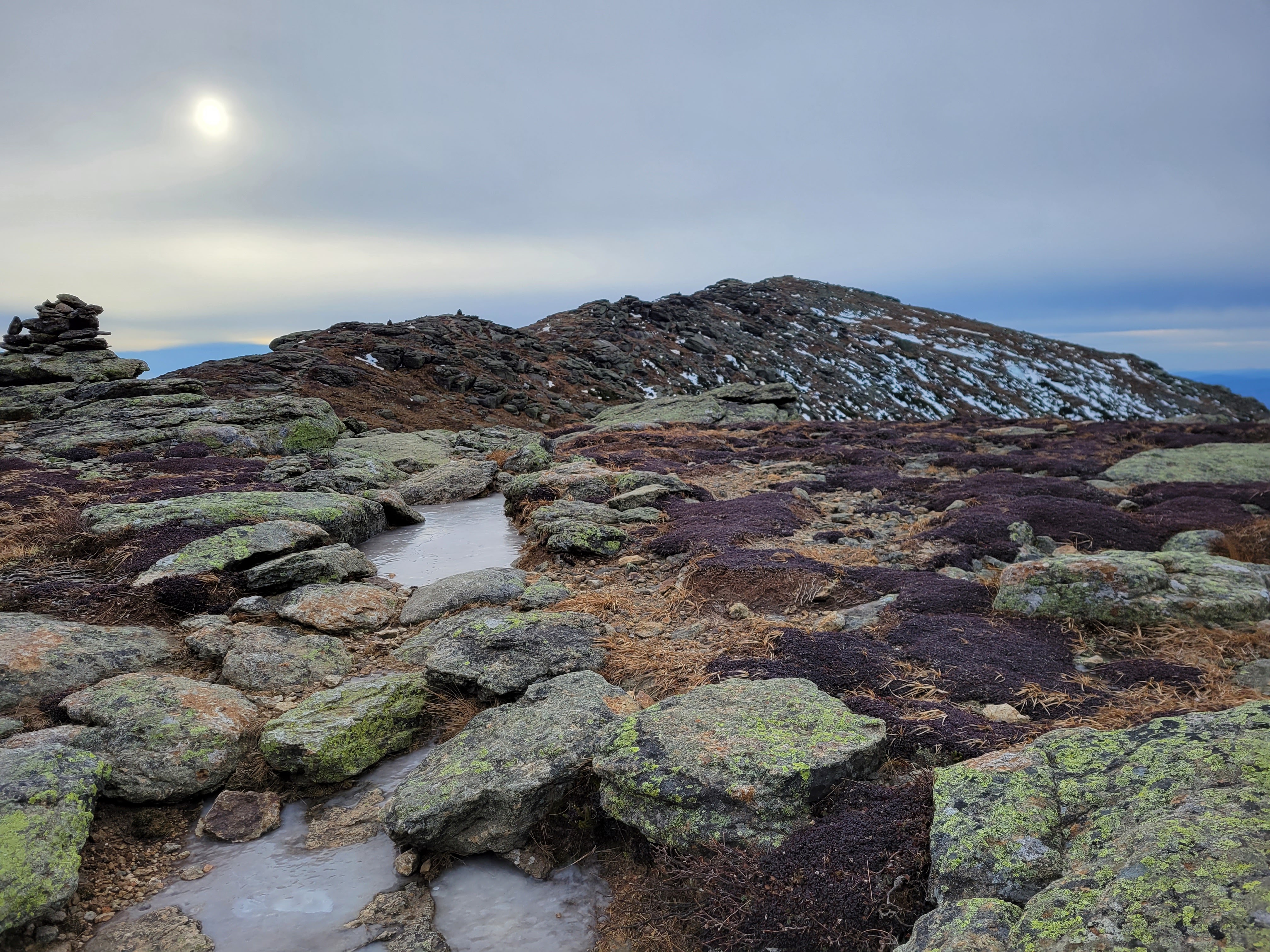
The most obvious change was the sudden exposure to 30 or 40 mph winds trying to blast me off my feet. That might sound like it would add to my suffering with wind chill and destabilization, but while those did hamper me somewhat, they were were than made up for by another effect of the winds; there was almost no snow covering the ground anymore. The constant gusts across the exposed ridged seemed to have scoured away any of the frozen stuff that tried to accumulate. Walking still hurt, but not so much as before. I felt like I could move freely and (relatively) easily again. And above the trees, there were much better things than my pain to occupy my attention.
As I began to traverse the alpine zone towards Mount Lafayette, the whole world opened up around me. Yesterday the best views had only revealed small sections of where I’d hiked before. The side of a single mountain, or two. Today I could see everything. Bondcliff. South Twin. Garfield. The whole Pemigewasset wilderness fell under my gaze. If it weren’t for the wind roaring in my ears and trying to freeze me, I would have been happy to stand there for hours. Unfortunately, the wind was there, and I did need to keep moving, but that couldn’t keep me from my newfound joy. And once I put my windbreaker on, the cold could barely touch me.
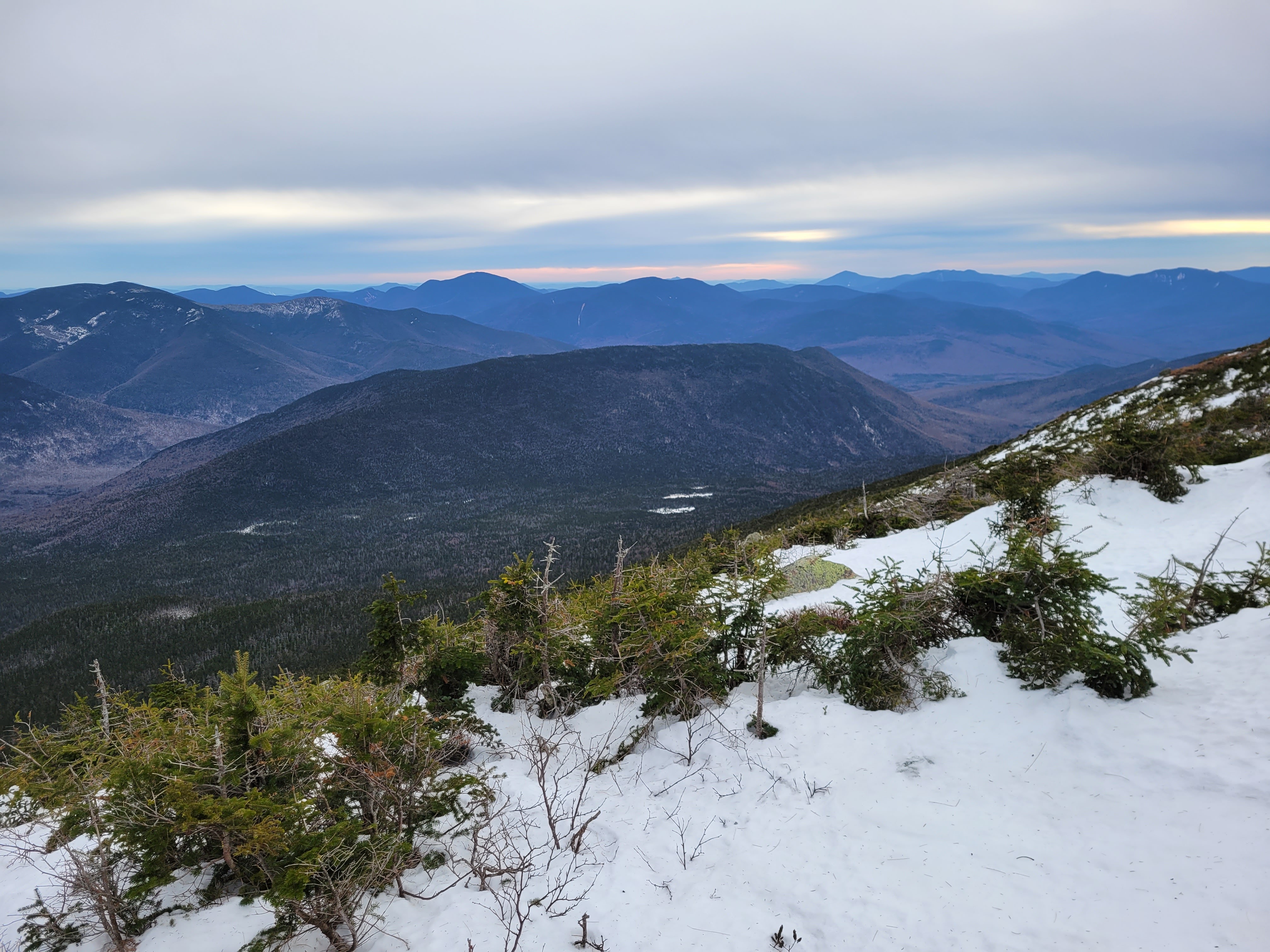
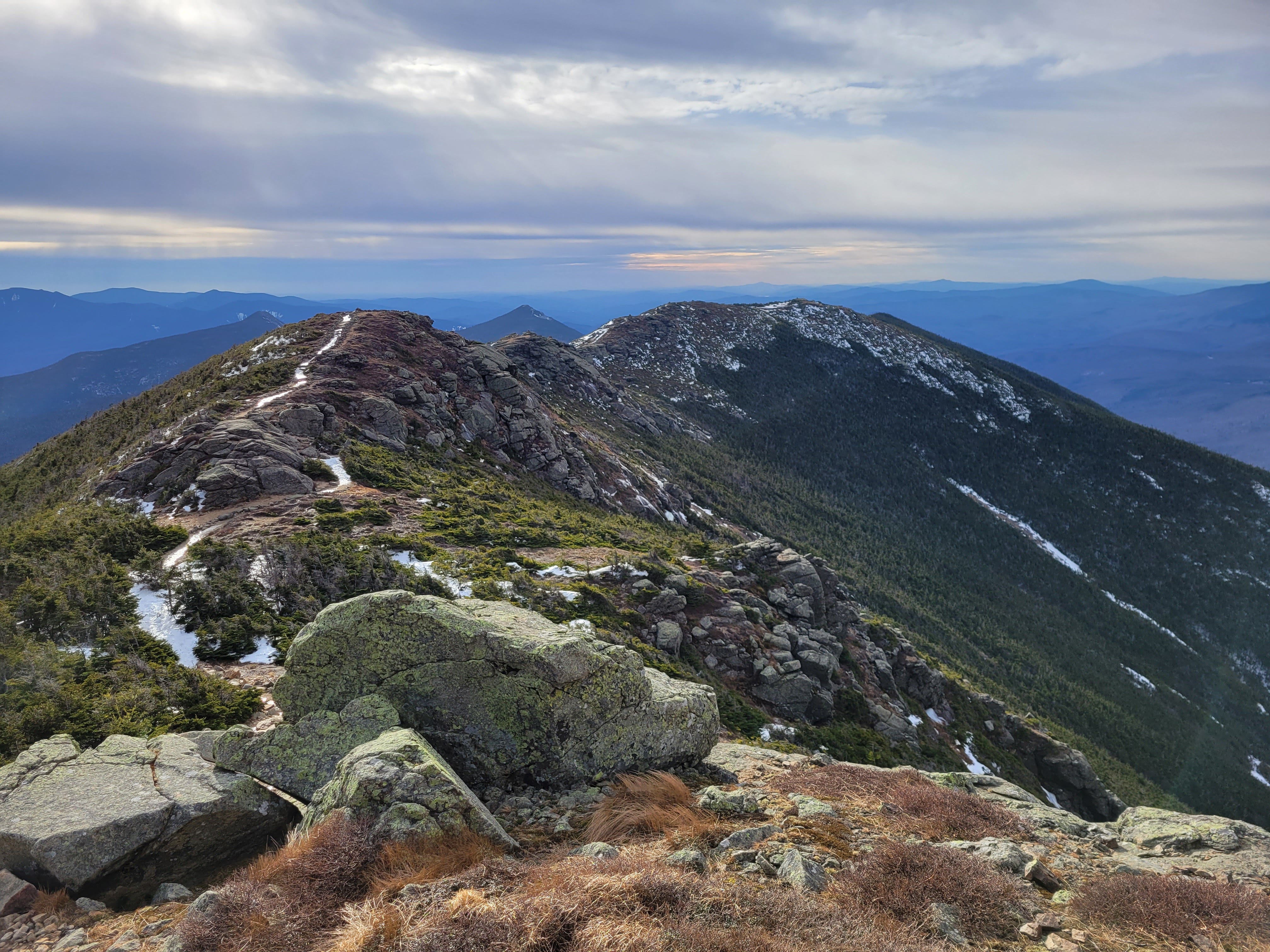
Once I reached the top of Lafayette, I was done with the majority of my climbing for the day. I could see the whole of Franconia Ridge reaching out ahead of me, and it was beautifully flat. The next couple miles along the ridge to Mount Lincoln, and then to Little Haystack, were undoubtedly the best miles of the trip. The views I had seen when I first climbed above the trees only seemed to improve as I went, and the cold and wind had kept other (saner) people away, so it was as if I had the whole vast wilderness to myself. I felt like I had a personal claim on the land. I hiked over that mountain yesterday. That one there? I’ll have conquered that in another few hours. I could see the lines and contours of the land, familiar to me from maps, now laid out in beautiful reality before me. Whatever else happened, this more than made up for the pain I had to suffer to reach here.
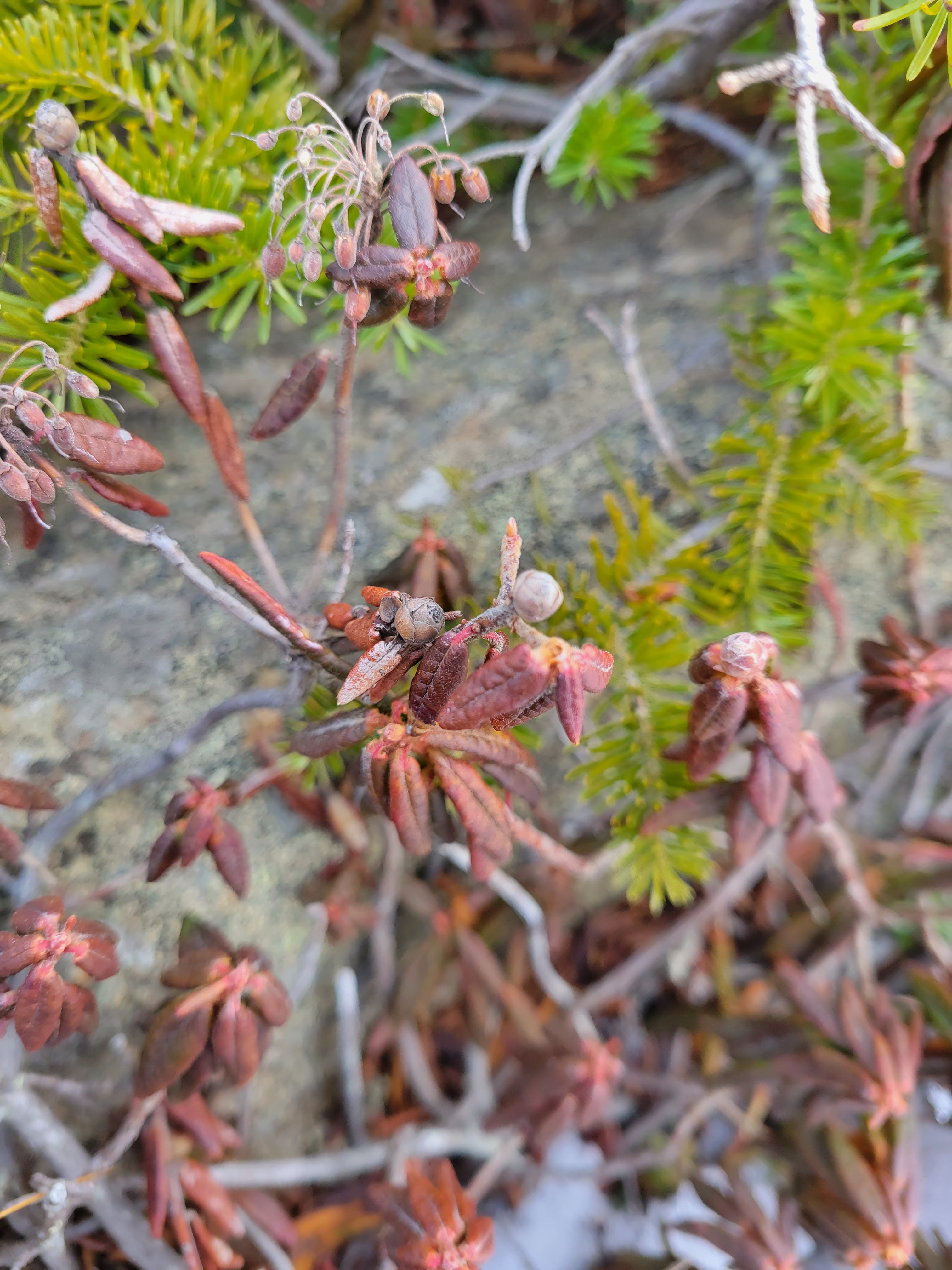
Even after I dropped back into the forest, the good mood from the ridge lingered. My slow, plodding pace, while notably faster since the ridge, was still keeping my pain and exhaustion from getting out of hand. Along with my improved mood came an appetite to take in the details of the forest around me. I noticed an interesting bird track in the snow. I briefly paused to examine the remains of a once flowering plants on the side of the trail.
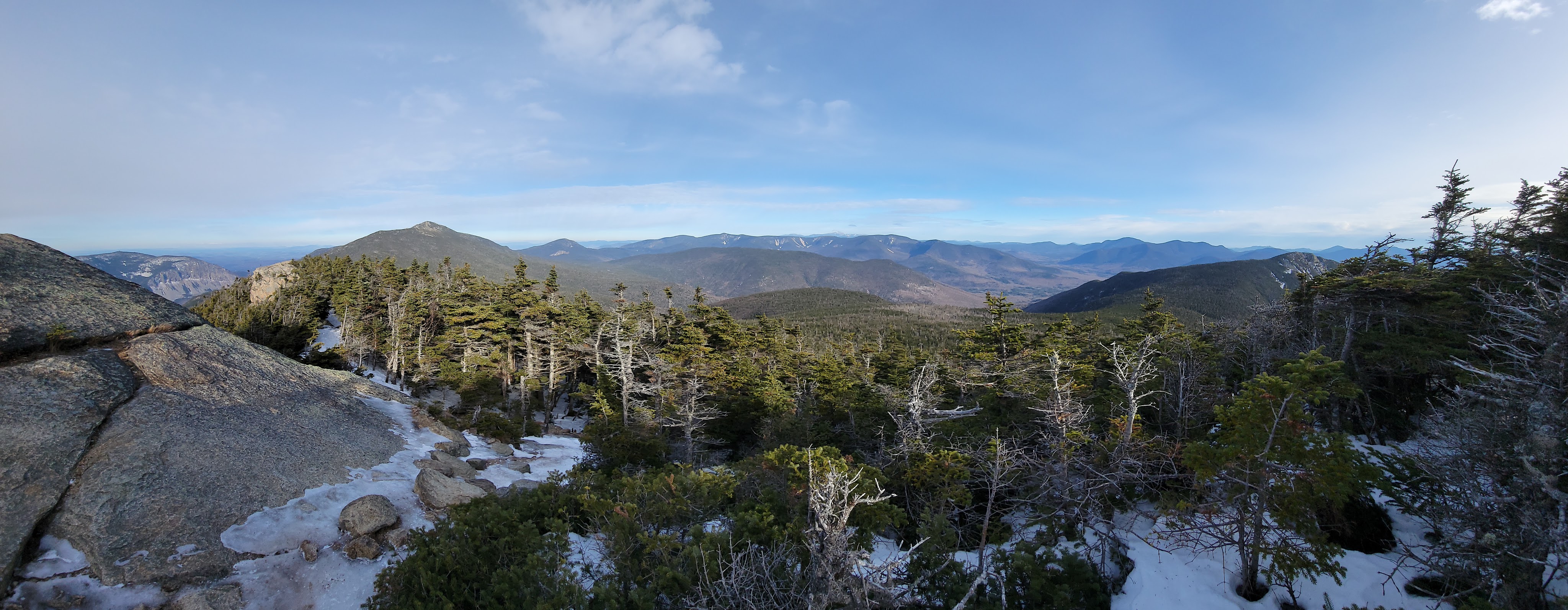
I still had two more 4000 footers to climb before I finished the trail. The climb to the summit of the first of these peaks was expectedly painful, but the reward was more than worth it. While Franconia Ridge was my favorite section of the trail, the summit of Mount Liberty was my favorite singular spot. It’s view equaled or surpassed all those from the ridge, but it was sheltered from the wind enough that I could happily stand there and take it in without feeling frozen or abused.
Standing there, I was overwhelmed with a sense of place and an awareness of the land around me. There’s a sort of bond that forms with the land when I can look across a landscape and remember what it was like to be there. If I’m driving through a place, I can pause and think “that looks really cool,” but there is a detachment. There’s no memory attached to the place beyond a distant visual impression. Looking out over the Pemigewasset Wilderness, not only could I appreciate the view, but I could remember how I felt pausing as I walked across a ridge, or how much pain I was in descending a specific slope. In some sense, that land was part of me now. It had left its mark on me. I think I finally understand why some people talk about time in the wilderness feeling more “real” than the rest of life. It’s a feeling that is hard to capture in civilization, and I think it’s one of the things that drives to towards these extended wildness adventures.
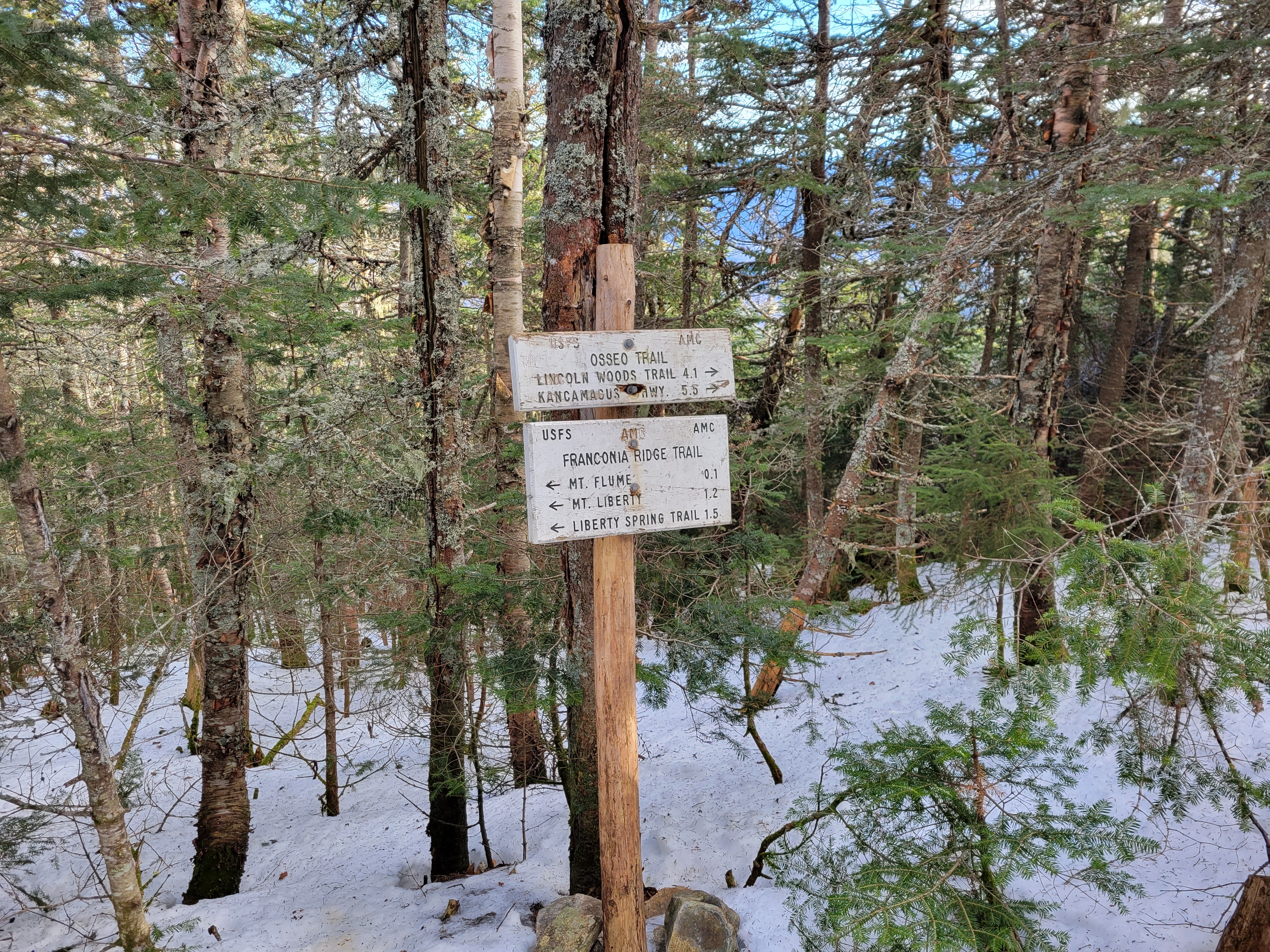
I felt like I would have been happy just standing at that summit and basking in that sensation for hours, but the sun was still trekking across the sky, and I wanted to get as far I could while the light lasted. It took about an hour more to reach Mount Flume, the final peak on the loop, and compared with the previous peaks, it was pretty unspectacular. Despite the lack of thought-provoking views I could till see enough to entertain myself trying to determine my path of descent by matching the visible topography to the contour lines on my map. It was fun to create and excuse to practice my map reading skills, and I’m pretty sure I even did it right for the most part.
I was still making good time through the trees, and the trail was well-packed, so I was feeling good as I began the final descent of the trip around 13:00. With 3.5 hours of sunlight left and 5.6 miles left to the car, I’d probably have to hike a little in the dark, but by then I would be well below tree line and probably back to the long flat railbed that had started the hike. I felt good, and the last of my concerns about being able to finish were melting away.
I ran into other people for the first time that day as I was descending Flume, and they warned me of some sketchy sections of trail ahead. Given everything I’d dealt with already, I wasn’t too concerned, but a few minutes later I saw what they meant. To make the steep climb more manageable, some kind soul had installed a long series of wooden stairs up the mountain. I’m sure the stairs would have been very nice in the summer, but in winter, especially after the rain and cold of the last two days, they had filled in with snow and frozen. Rather than a few steps to help the descent, I was faced with a very bumpy ice slide steep enough to make the traction from my microspikes unreliable. Fortunately, there was ample space to trek through the snow to the side of the slide, and I was able to avoid the worst of it without too much difficulty. Soon I was out of the sketchy zone and into a gentle descent that would characterize the remainder of my journey.
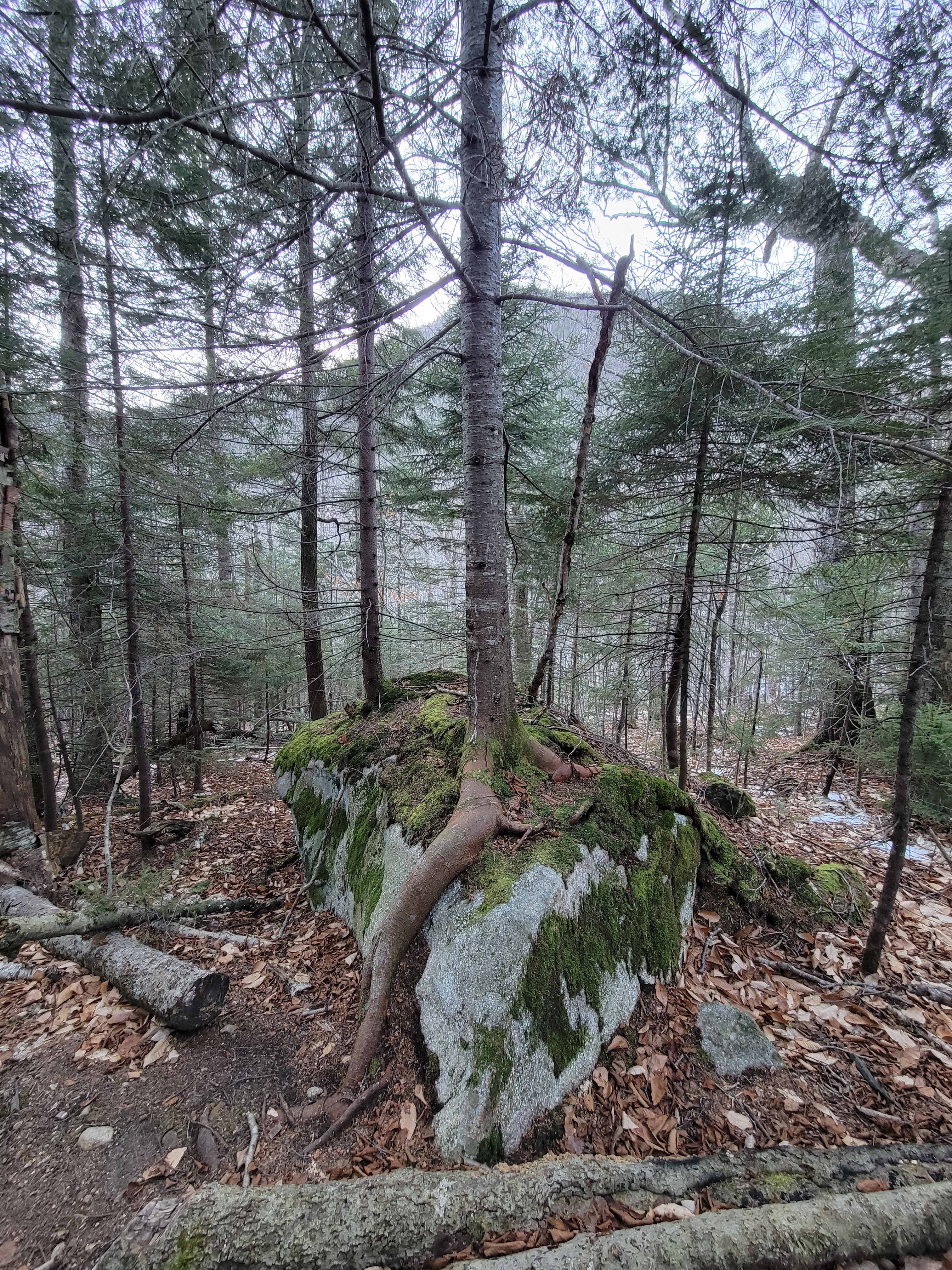
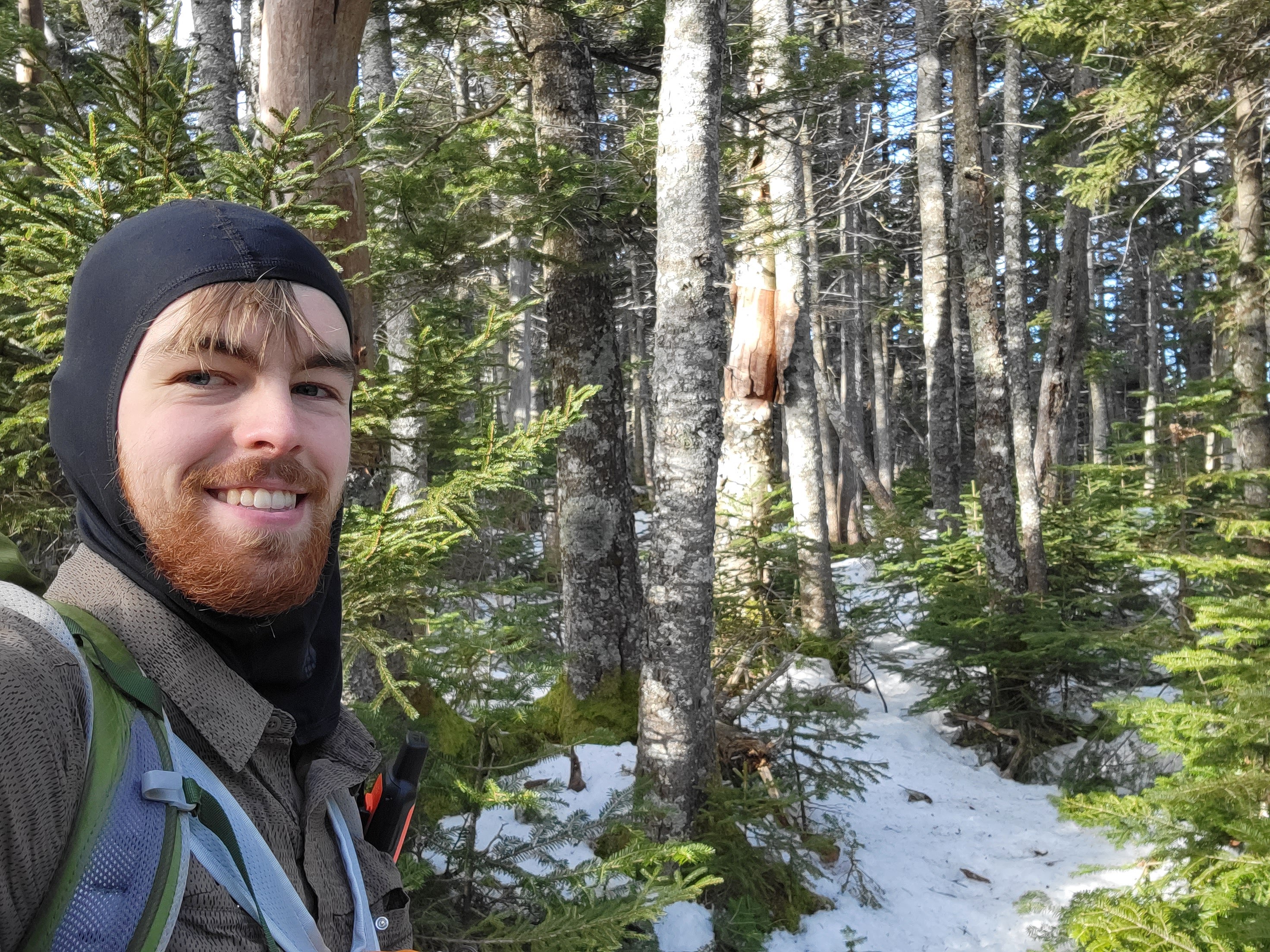
As I continued my descent, the world around me began to change. The thick blanket of snow slowly faded to intermittent patching of snow dotting the ground. The green high-altitude pine trees were replaced by the bare branches of deciduous trees in the winter. As the temperatures rose my shoe laces, once frozen and doing their best impressions of steel wire, were again the floppy and flexible creatures I could actually manipulate. For the first time since Saturday I took off my balaclava and could walk comfortably without the additional traction from microspikes. My feet were quite pleased to be relieved of the constricting devices, and I was making much better time than I had expected. I spotted a bird running through the trees that may have been responsible for the tracks I had seen earlier.
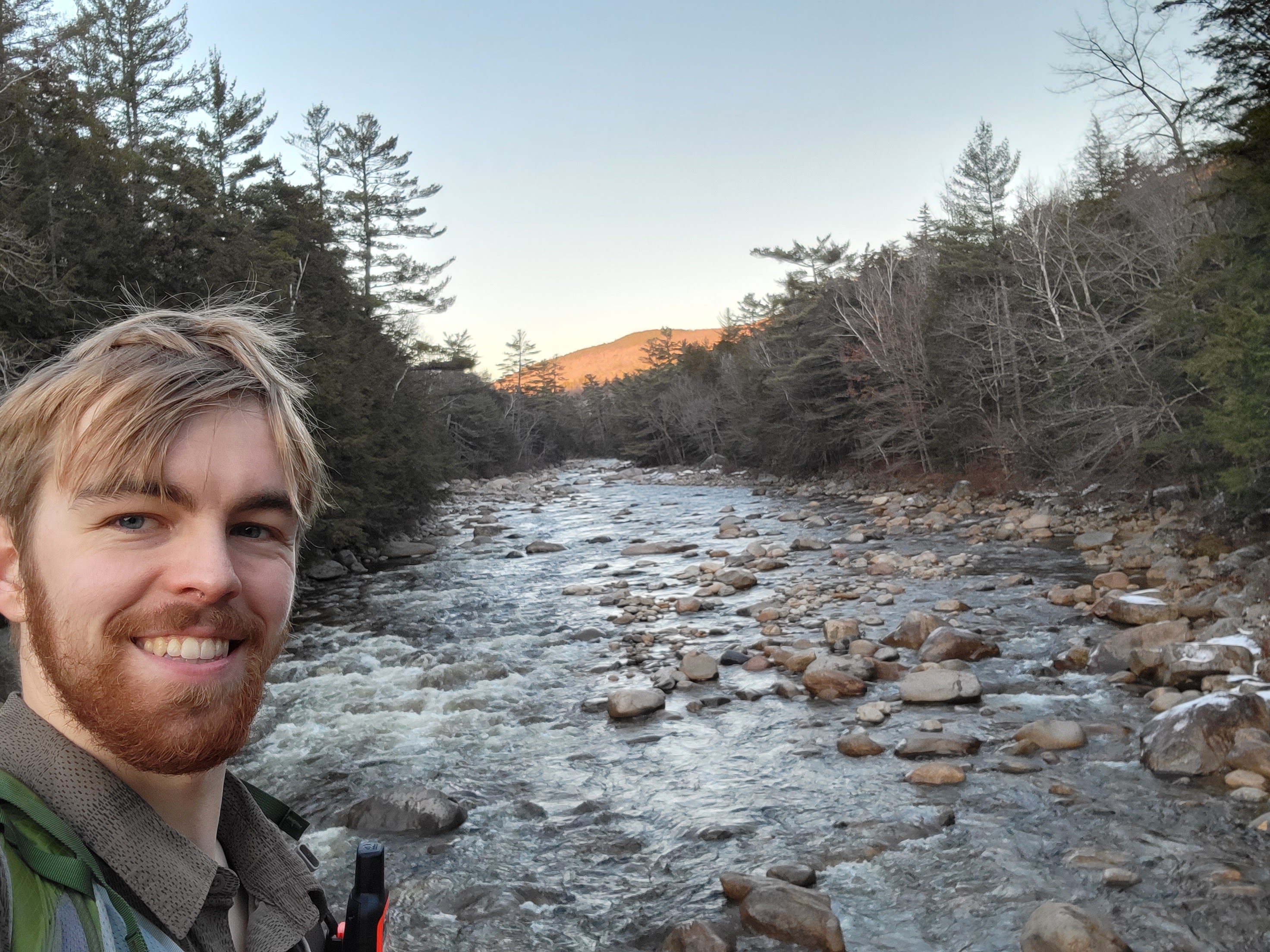
A fit of nostalgia struck me as I was walking along a ridge above a babbling mountain brook around around 15:00. Low angled sun and cool-but-not-frigid temperatures always remind me of late summer evenings and pleasant times past, but this time there seemed to be a specific memory trying to reemerge. After some thought, I convinced myself I was recalling our family trip to Marion Lake in Oregon when I was 10 years old. It was the first time I’d been backpacking. Late spring snow was more abundant than expected, and somehow every meal we cooked had way too much water in it, so my parents decided to cut the trip short by a night. But the chill, the patches of snow, and the babbling brook below all felt very similar to my memories, and it got me thinking about how much my life had changed since that first backpacking trip. Everything seems much busier and more complicated now, but I’m generally happy with things. The ability of the wilderness to brings those memories back and get me thinking is really something special.
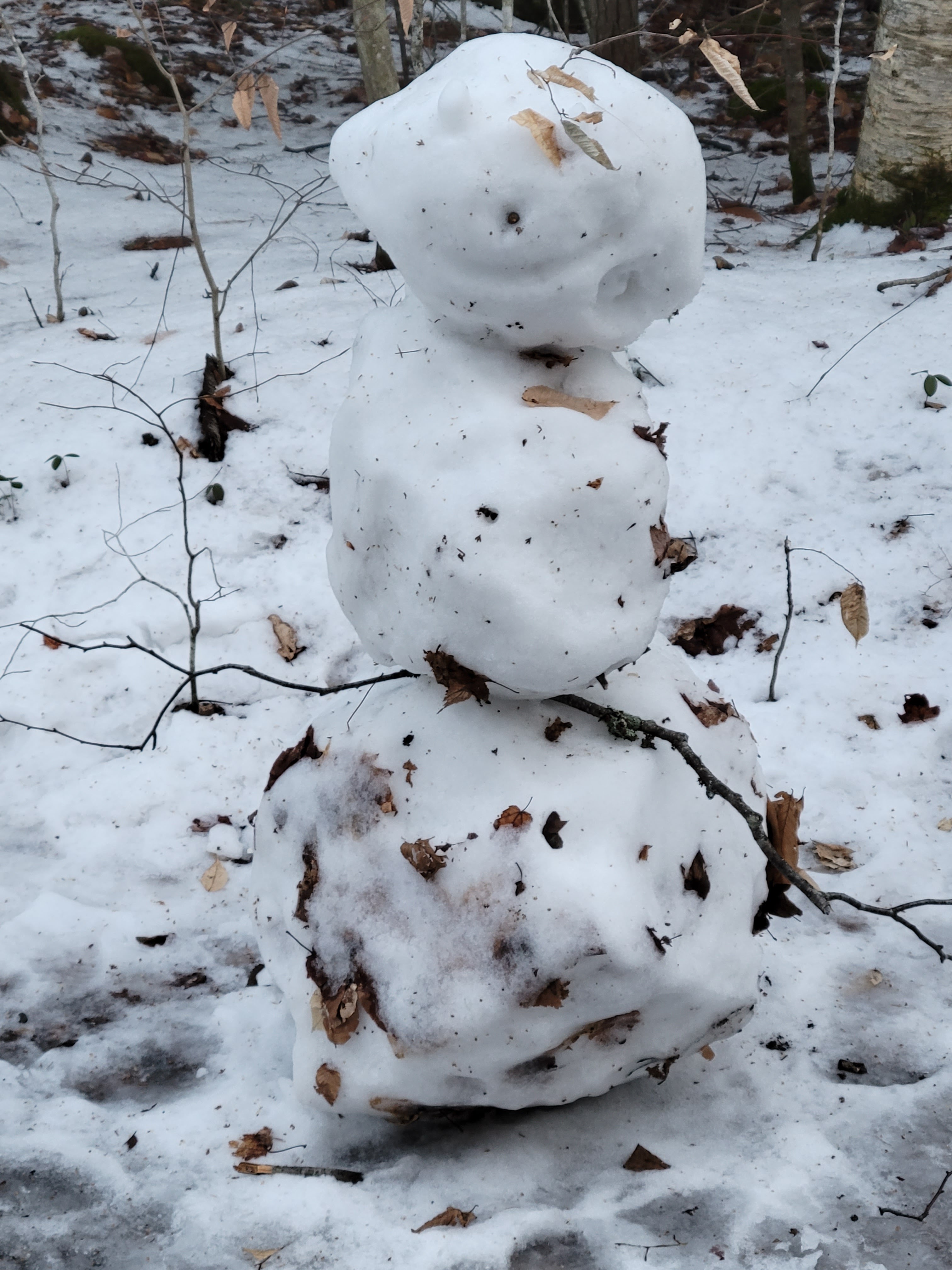
The last few miles of the hike were exceedingly pleasant, following along the edge of that same brook until I rejoined with the Lincoln Woods Trail. Since I’d left two days before, much of the snow had vanished, and two inches of slush had frozen solid, forcing me back into my microspikes. I was hiking more than two miles per hour as the sun set on the last mile of trail. Someone had given a head to snowperson who’d been incomplete two days before and it felt somehow symbolic of my trip. It began as a painful and suffering headless snowman but eventually it received its head and everything was better.
It had been a wonderful day, and despite all the suffering that had preceded it, I was very glad for the experience. Even though I would be recovering from the punishment I’d inflicted on myself for weeks to come, when I finally returned to my car, sore tired and cold a little after 16:00, I was very happy. I’d love to do the hike all over again. But maybe a little slower, or with a little less snow next time.
Trip Details
- Date: December 13, 2021
- Distance: 12.8 miles
- Route: https://www.alltrails.com/explore/map/map-march-4-2022-1-41-am-0b9e57c
- Whole Trip: https://hikingandfishing.com/pemi-loop/
 Pokin' Along